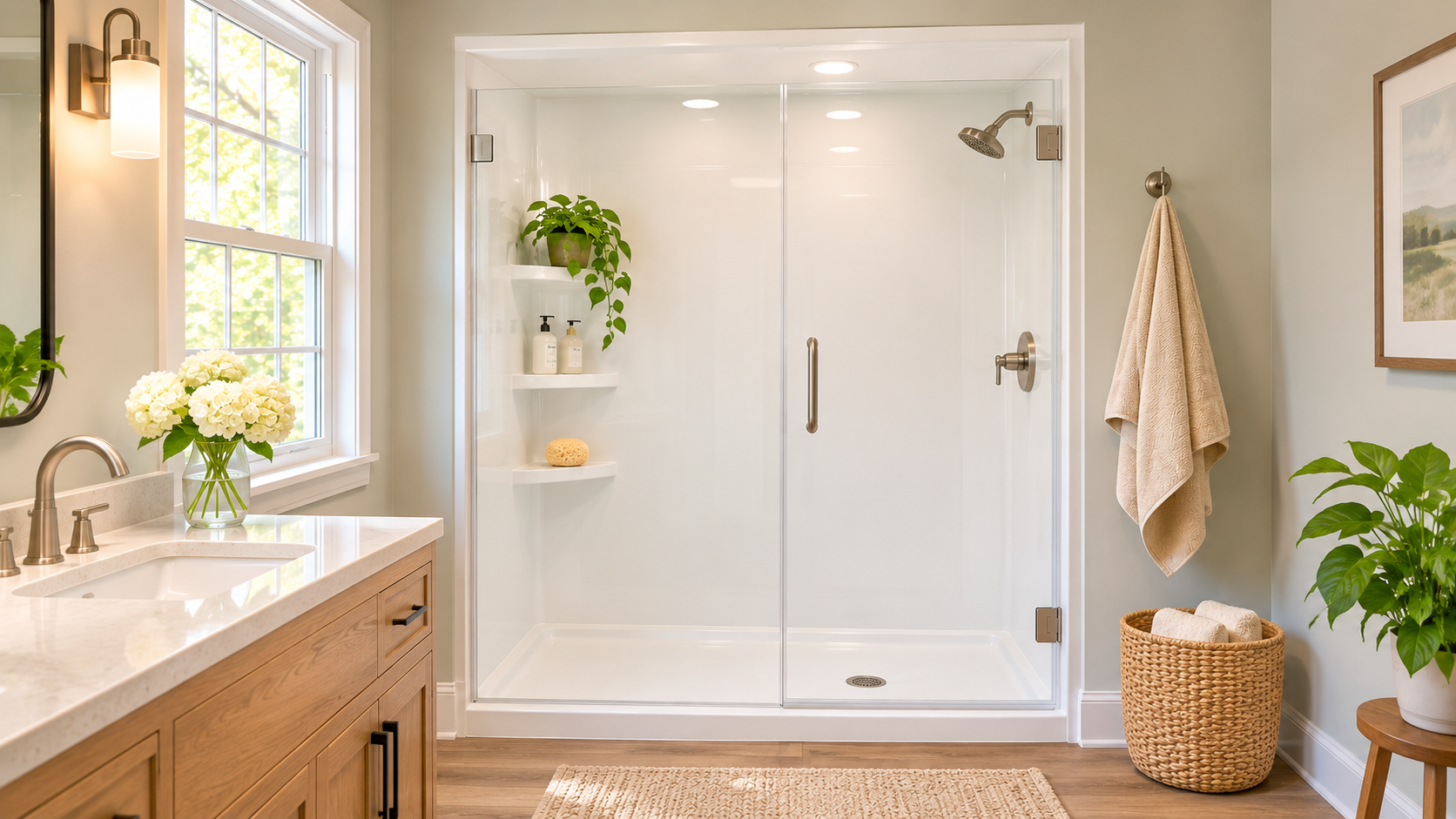
A tub-to-shower conversion replaces an existing bathtub with a dedicated shower. For homeowners who rarely use their tub, it can make the bathroom more practical, simplify everyday cleaning, and create an opportunity for a more comfortable shower layout.
But removing a bathtub isn't automatically the right choice for every home.
The best decision depends on how your household uses the bathroom, whether you have another bathtub, your long-term needs, and what your existing plumbing and space will allow.
What Is a Tub-to-Shower Conversion?
A tub-to-shower conversion involves removing an existing bathtub and installing a shower in its place, often within approximately the same footprint.
Depending on the bathroom and selected system, the project may include a new shower base, wall surrounds, plumbing adjustments, an enclosure, and features such as shelving, a seat, or grab bars.
Unlike a full bathroom remodel, a focused conversion generally leaves the vanity, toilet, and overall room layout in place.
At The Bath Renovators, tub-to-shower conversions are one of the bathroom improvement services we offer to homeowners in the Evansville area and surrounding approved service communities.
When Does Converting a Tub to a Shower Make Sense?
A tub-to-shower conversion often makes sense when the existing bathtub no longer suits the household's daily routine.
Consider a conversion if:
You rarely take baths. A dedicated shower may be more useful than a bathtub that mostly goes unused.
Stepping over the tub wall is inconvenient. A properly selected low-threshold shower can reduce the height you need to step over, although it does not eliminate every accessibility concern.
You want a more comfortable shower. Replacing a bathtub may allow for a better shower configuration, depending on the available space.
Cleaning the current tub is frustrating. An acrylic shower surround can eliminate grout lines on the shower walls and provide a surface that's relatively straightforward to maintain.
You're planning for changing household needs. Considering entry height, seating, controls, and available support features now can help you make more informed long-term choices.
A conversion is most worthwhile when it solves an actual problem with how the bathroom functions.
When Should You Consider Keeping the Bathtub?
There are legitimate reasons to keep a tub, even when a walk-in shower looks appealing.
If the bathtub is the only one in your home, think carefully about who uses it today and who might need it in the future. Families with small children, people who enjoy soaking baths, and some prospective homebuyers may value having a bathtub available.
Your decision may also depend on how long you expect to remain in the home.
If you plan to sell soon, ask a knowledgeable local real estate professional how removing the home's only bathtub might affect its appeal. There is no universal rule that converting a tub increases or decreases resale value.
And if bathing remains part of your routine, keeping the tub—or considering another bathing option—may be the more practical decision.
Tub vs. Walk-In Shower: What Are the Main Trade-Offs?
Choosing between a bathtub and a walk-in shower depends on how you use the bathroom today and what you might need in the future. Here are six important considerations.
Everyday Use
Bathtub: Supports both soaking baths and showers.
Walk-in shower: A practical choice for households that primarily shower and rarely use the bathtub.
Ease of Entry
Bathtub: Requires stepping over the tub wall to enter or exit.
Walk-in shower: Can offer a lower entry threshold, depending on the selected shower base and configuration.
Cleaning and Maintenance
Bathtub: Requires cleaning the tub basin and surrounding surfaces.
Walk-in shower: Maintenance depends on the materials. Acrylic wall systems eliminate tile grout joints on the shower walls, making some cleaning tasks simpler.
Bathing Children
Bathtub: Provides a traditional bathing option for young children.
Walk-in shower: Removes that bathing option from the bathroom, which may be a consideration for some families.
Long-Term Bathroom Planning
Bathtub: May remain the better option for people who prefer or need a bathing setup.
Walk-in shower: Can accommodate selected features such as lower thresholds, seating, and grab bars, depending on the bathroom and available products.
Home Resale Considerations
Bathtub: Preserves a bathing option that some future buyers may value.
Walk-in shower: May appeal to buyers who prefer a dedicated shower. The effect on resale value depends on the home, local market, and whether another bathtub is available.
The bottom line: Neither option is universally better. The right choice is the one that accommodates your household's routines, priorities, and future needs.
What Features Should You Consider in a New Shower?
A successful conversion starts with the practical details.
Shower entry and threshold height
A low-threshold shower has a smaller step than a traditional bathtub wall. A true curbless shower has a level transition at the entrance, but its feasibility depends on the floor structure, drainage, selected system, and bathroom layout.
Low-threshold and curbless do not mean the same thing. Ask which entry configurations are available for your specific bathroom.
Wall surrounds and maintenance
Acrylic wall surrounds offer an alternative to conventional tile walls. Because they do not require tile grout joints, they can simplify some routine cleaning tasks.
The Bath Renovators uses acrylic shower wall systems rather than installing traditional tile wall surrounds. Available colors, finishes, and configurations should be reviewed during product selection.
Shower doors and enclosure layout
Glass doors can give the bathroom a more open appearance. Other enclosure arrangements may provide different advantages for entry, cleaning, available floor space, and the way the door opens.
The best choice depends on the room—not simply on appearance.
Seating, grab bars, and shower controls
Depending on available products and the bathroom's construction, a conversion may include features such as a shower seat, grab bars, or a handheld showerhead.
Placement matters. Controls should be convenient to reach, and any support feature needs appropriate installation and structural support.
These additions can improve usability, but no bathroom feature alone guarantees protection from slips or falls.
What Affects the Cost of a Tub-to-Shower Conversion?
The cost depends on the existing bathroom and the scope of the proposed work.
Important factors include:
The size and configuration of the existing bathtub area
Plumbing and drain modifications
The condition of the walls, subfloor, and surrounding materials
The selected shower base and wall system
Door or enclosure choices
Added features such as seating, grab bars, and shelving
Any work needed outside the original tub footprint
A straightforward conversion within the existing space may require less extensive remodeling than a project that changes the entire bathroom layout. However, conditions discovered during removal can affect the final scope.
Because bathrooms vary, an estimate based on the actual space and selected materials is more useful than assuming one standard price applies to every conversion.
What Happens During a Tub-to-Shower Conversion?
The general process begins with evaluating your existing bathroom and discussing what you want to change.
1. Evaluate the bathroom. Review the existing tub, available dimensions, layout, plumbing considerations, and project goals.
2. Choose the shower configuration. Discuss entry height, wall finishes, enclosure style, controls, storage, and any additional features.
3. Define the work. Confirm the proposed scope, materials, installation expectations, and any conditions that may require additional attention.
4. Remove the existing bathtub. The old tub and affected surrounding materials are removed so the replacement area can be prepared.
5. Install and finish the shower. The selected base, wall system, fixtures, and enclosure are installed according to the applicable project requirements.
Installation time varies with the bathroom's condition and the work involved. Ask for a timeline specific to your project rather than assuming every conversion will take the same amount of time.
Frequently Asked Questions
Q: Can I replace my bathtub with a walk-in shower without remodeling the entire bathroom?
Often, yes. A tub-to-shower conversion can focus on the existing bathtub area while leaving the vanity, toilet, and much of the room intact. The exact scope depends on the current layout and condition of the space.
Q: Does a tub-to-shower conversion make a bathroom more accessible?
It can improve entry convenience when a high tub wall is replaced with an appropriate lower-threshold design. However, accessibility depends on more than entry height. Space, flooring, seating, controls, support features, and individual needs should all be considered.
Q: Will removing a bathtub hurt my home's resale value?
There is no guaranteed answer. Removing the only bathtub may reduce appeal for some buyers, while a well-designed shower may appeal to others. Consider the home's layout, other available tubs, local market conditions, and how long you expect to stay.
Q: Are acrylic shower walls difficult to maintain?
Acrylic shower walls generally avoid the grout-cleaning needs associated with traditional tile walls. They still require routine care, and cleaning products should follow the manufacturer's instructions.
Q: How do I know if my bathtub can be converted into a shower?
A bathroom professional should evaluate the existing space, plumbing, drainage, and desired shower configuration. Many conventional bathtub areas can be considered for conversion, but the practical options depend on the home.
Considering a Tub-to-Shower Conversion in the Evansville Area?
The Bath Renovators helps homeowners explore bathroom improvements, including tub-to-shower conversions, shower replacements, and selected features intended to make everyday use more convenient.
If your existing bathtub no longer works for your household, a consultation can help you understand the available configurations, materials, and project requirements.
📞 Ready to Upgrade Your Bathroom?
If you're planning a bathroom remodel in Evansville, Newburgh, or the surrounding areas, The Bath Renovators can help you explore your options and find a solution that fits your needs, your home, and your budget.
Call 833-843-2284 or request your free quote to get started.